


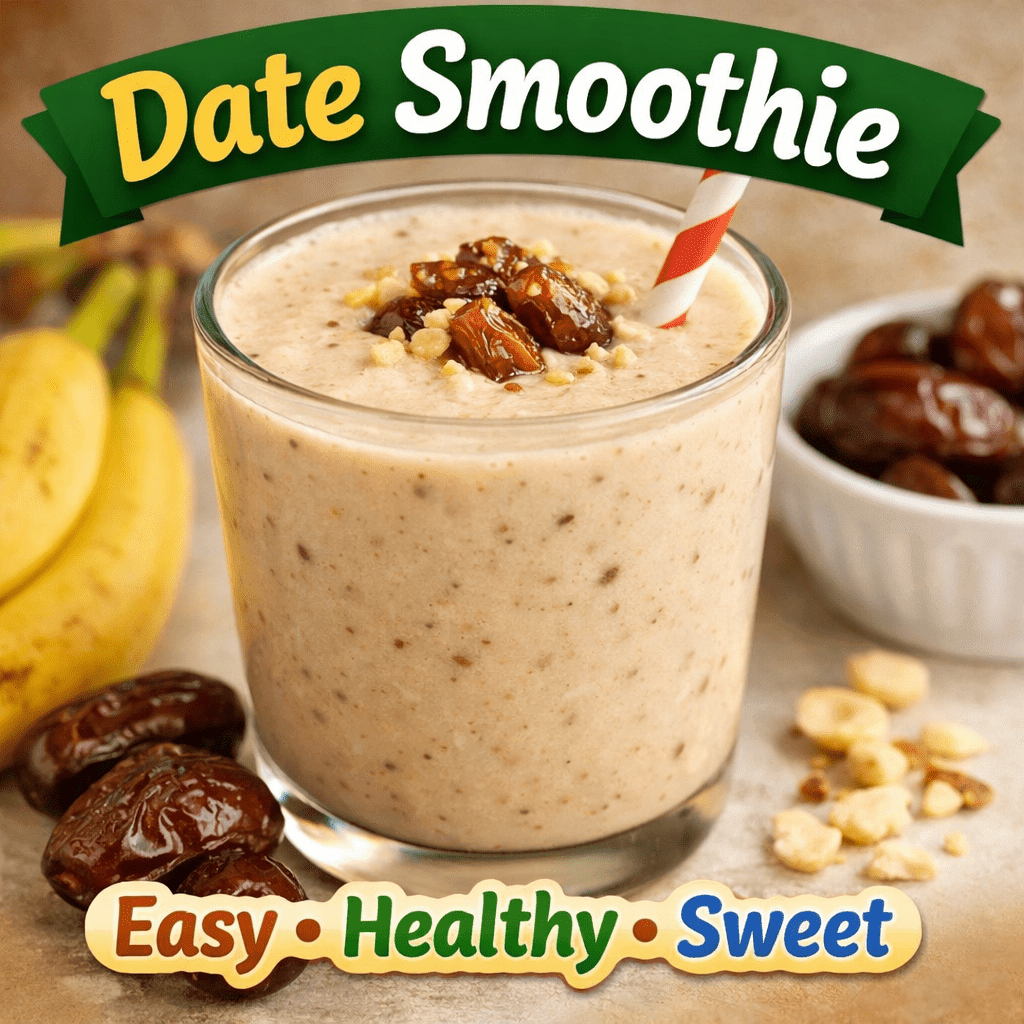
Date Smoothie Bliss: 4-Ingredient Healthy Banana Date Shake
Date smoothie lovers—this one’s for you. If you want a naturally sweet, creamy, and energizing drink without protein powders or processed sugar, this banana date shake is the easiest win. It’s quick, budget-friendly, and tastes like dessert while still being a smart breakfast or snack.
Date Smoothie: What It Is (And Why It’s So Popular)
A date smoothie is a blended drink that uses dates as the main sweetener. Dates bring caramel-like flavor, natural sweetness, and a thick texture—so you can skip added sugar and still get a rich, milkshake-style result.
This recipe is a “divinity” style banana date shake: minimal ingredients, big taste, and a smooth, creamy finish. If you’re trying to build a healthier breakfast habit, this is one of the easiest smoothies to keep on repeat.
Why You’ll Love This Date Smoothie Recipe
- Only 4 ingredients (no fancy extras required).
- Naturally sweet thanks to dates + banana (no refined sugar).
- Fast: ready in about 7 minutes.
- Customizable: make it dairy-free, higher protein, or minty-fresh.
- Great for mornings: a smooth start that actually keeps you satisfied.
4 Ingredients for a Healthy Date Smoothie
Here’s the simple list you need to make this date smoothie at home:
- Dates (4–6) — Medjool or any soft dates. If they’re dry, soak them.
- Banana (1 medium) — adds creaminess and natural sweetness.
- Milk (1 to 1½ cups) — dairy milk, almond, oat, or soy all work.
- Ice (½ to 1 cup) — makes it cold and thick like a shake.
Optional (not counted): pinch of cinnamon, ¼ tsp vanilla, or 1 tbsp peanut butter.
How to Make a Date Smoothie (Step-by-Step)
Step 1: Soften the dates (if needed)
If your dates feel dry or firm, soak them in warm water for 5–10 minutes. This helps your blender create a smoother date smoothie with zero chunks.
Step 2: Add ingredients to the blender
Add milk first (helps blades move), then dates, banana, and ice.
Step 3: Blend until creamy
Blend for 45–60 seconds. Stop and scrape the sides if needed, then blend again for 10–15 seconds.
Step 4: Taste and adjust
- Want it sweeter? Add 1–2 more dates.
- Want it thicker? Add more ice or half a frozen banana.
- Want it thinner? Add a splash of milk.
Serve immediately for the best creamy texture.
Pro Tips for the Best Date Smoothie Texture
Use these quick tips to make your date smoothie taste like a café-style shake:
- Use frozen banana for extra thickness and less ice.
- Soak dates if your blender isn’t high-powered.
- Blend longer than you think (smoothness comes from time).
- Add cinnamon for a dessert-like flavor without sugar.
- Use chilled milk to keep it cold and creamy.
Date Smoothie Variations (Mint, Spinach, Weight Loss)
1) Classic Mint & Date Smoothie (Ultimate Energy Guide)
For a fresh, energizing twist, add:
- 6–8 mint leaves
- ½ tsp lemon juice (optional but bright)
This minty date smoothie feels lighter but still sweet and creamy.
2) Spinach Mint Smoothies Benefits (Greens + Freshness)
Want extra nutrition without changing the taste much?
- Add 1 small handful of spinach
- Add 4–6 mint leaves
Dates help balance the flavor so your smoothie stays enjoyable.
3) Mint Smoothie for Weight Loss (Lower-Calorie Swap)
For a lighter version:
- Use unsweetened almond milk
- Use 3–4 dates instead of 6
- Add more ice + cinnamon for volume and flavor
4) Original Date Shake Recipe (Thicker “Milkshake” Style)
For a thicker, dessert-like date shake recipe:
- Use frozen banana
- Use full-fat milk (or thick oat milk)
- Add 1 tbsp peanut butter (optional)
5) How to Blend Dates in a Smoothies (No Chunks)
To avoid chunks in your date smoothie:
- Soak dates if they’re not soft.
- Remove pits completely.
- Blend dates with milk first for 20 seconds, then add banana + ice.
Are Date Smoothies Healthy?
Yes—when balanced. A date smoothie can be a healthy option because it uses whole foods and natural sweetness. Dates provide quick energy and fiber, while banana and milk add filling texture and nutrients.
Healthy swaps:
- Higher protein: add Greek yogurt or a scoop of plain protein.
- Dairy-free: use almond, oat, or soy milk.
- Lower sugar: reduce dates and add cinnamon + vanilla for flavor.
Helpful reading (external dofollow links):
USDA FoodData Central,
Harvard Nutrition Source,
Academy of Nutrition and Dietetics.
What to Eat With a Date Smoothies
This date smoothie is perfect alone, but it also pairs well with simple meals. Try it with:
- Egg toast or a quick omelet
- Granola or oats
- Light lunch prep ideas after your smoothie
Internal links (use these for SEO):
FAQs
Does the 21 day smoothie diet really work?
It can help some people reduce calories and eat more fruits/vegetables, but results depend on total daily intake and balance. For long-term success, focus on a sustainable plan—use smoothies as one healthy meal, not your only food.
Is it okay to drink an energy smoothies every day?
Usually yes, as long as it fits your needs. Keep your smoothie balanced (protein + fiber) and watch added sugars. A daily date smoothie is best when it’s part of an overall healthy routine.
Are date smoothies healthy?
Yes. A date smoothie can be healthy because dates sweeten naturally and add fiber. If you’re managing weight, control portion size and balance it with protein.
Will I lose weight if I just drink smoothies for a week?
You might lose water weight or reduce calories short-term, but it’s not ideal for everyone. A better approach is replacing one meal with a balanced smoothie and eating normal, healthy meals the rest of the day.
People Also Search For
- Classic mint & date smoothie the ultimate energy guide benefits
- Classic mint & date smoothie the ultimate energy guide recipes
- Classic mint & date smoothie the ultimate energy guide ingredients
- Original date shake recipe
- Mint smoothie for weight loss
- How to blend dates in a smoothie
- Spinach mint smoothie benefits
- Best date shake recipe